- Simulated Killings Draw Tourists
- Billion-rupee Niche Industry Grows
- A Scripted Crime Scene
Article Today, Hyderabad:
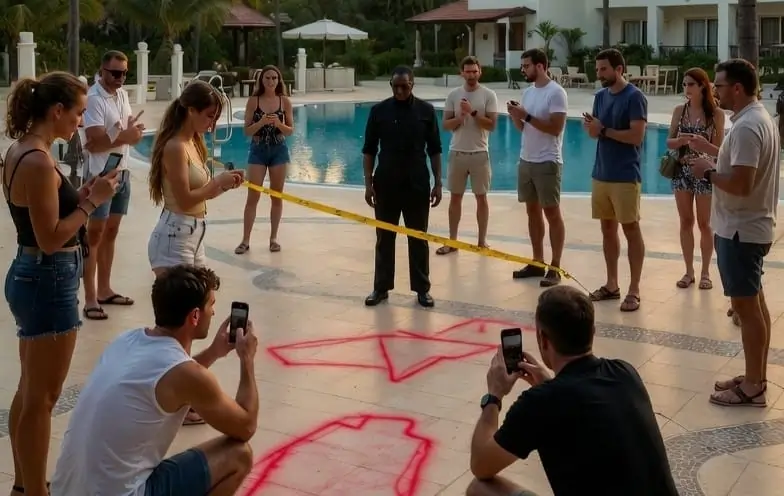
A scream breaks the silence inside a luxury resort. Guests gather around what appears to be a body. However, the scene is staged. The participants have paid to enter a live “murder mystery” experience. They now search for clues, question suspects, and attempt to identify the fictional killer. This form of crime-themed tourism is expanding rapidly in the United States and other countries.

The Concept Explained
Crime tourism in this context does not involve real violence. Instead, organisers design scripted scenarios. Professional actors play suspects and witnesses. Resort staff remain in character throughout the event. Guests receive assigned roles and background stories. Over two or three days, they investigate the staged crime as part of an immersive experience.
Growing Popularity
The trend has gained traction among affluent travellers seeking unconventional leisure. Luxury hotels host these themed weekends to attract new clientele. Participants describe the experience as interactive entertainment rather than passive viewing. Meanwhile, organisers market it as a blend of theatre, gaming, and hospitality. The format appeals to those who enjoy crime dramas and detective fiction.
High-Priced Packages
The cost of participation is significant. Standard packages can reach nearly Rs. 1 lakh per person for a weekend. Premium versions may cost up to Rs. 1.5 lakh. Organising companies report thousands of participants annually. In addition, hotels benefit from higher occupancy rates during off-peak seasons. Industry estimates suggest the segment is now valued at approximately Rs. 1,000 crore globally.
Business Model Expansion
Hotel operators view crime tourism as a strategic revenue model. By converting regular stays into themed experiences, they increase guest engagement. Some properties report revenue growth of up to 40 percent during such events. Therefore, the model has drawn interest beyond the United States. Similar concepts are emerging in parts of Europe and Asia.
Role of Performers
Professional actors play a central role in sustaining realism. They interact closely with guests and introduce misleading clues. Participants gather evidence, analyse motives, and conduct mock interrogations. Technology also supports the format. Organisers use mobile applications and digital clues to enhance immersion. However, the emphasis remains on live interaction.
Social Debate
Despite its popularity, crime tourism has sparked debate. Critics argue that turning murder into entertainment risks trivialising real-world violence. Supporters counter that the scenarios remain fictional and carefully controlled. They describe the format as structured storytelling rather than glorification of crime. Meanwhile, sociologists note that the rise of crime documentaries and streaming content has influenced public interest.
Market Outlook
Industry analysts project steady growth. Estimates indicate the sector could reach nearly Rs. 2,500 crore by 2026 if current trends continue. Annual growth rates are expected to hover around 20 percent. While conventional tourism has faced periodic slowdowns, themed experiential travel appears resilient.
Technology and Future Plans
Organisers are now exploring virtual reality and artificial intelligence tools. These technologies aim to create more detailed crime simulations within confined spaces. However, many participants prefer the human element of live performance. Therefore, training programmes for resort staff increasingly include acting workshops.
Crime tourism reflects a broader shift in leisure preferences. Travellers seek engagement rather than relaxation alone. As a result, staged crime experiences have evolved into a profitable niche within the global hospitality industry.