
- Ice Asteroids Filled Oceans
- Life Followed Planetary Cooling
Article Today, America:
For centuries, scientists have debated how Earth acquired its vast oceans. Unlike other rocky planets, Earth retained abundant surface water. This contrast has remained one of planetary science’s central questions. Recent NASA findings have now added clarity to this enduring mystery.
Findings from Space Science
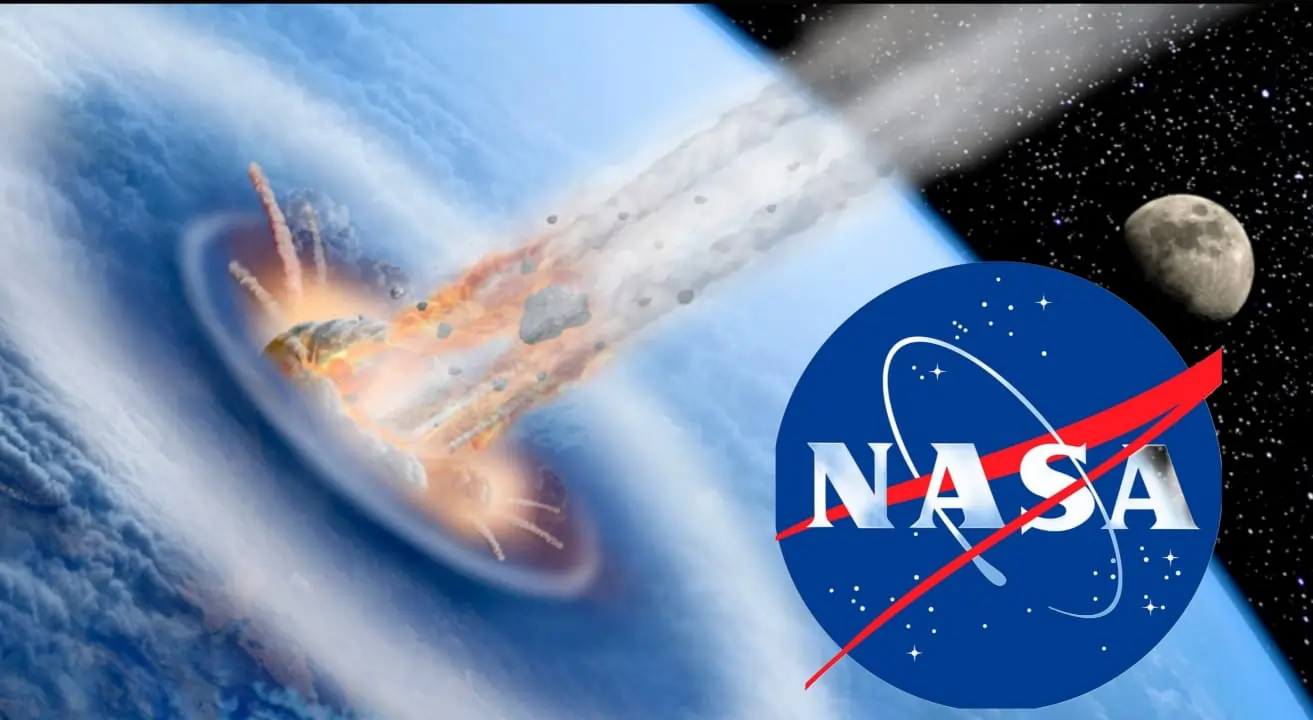
A new study led by NASA presents strong evidence that most of Earth’s water arrived from space. According to the research, icy asteroids striking the early Earth delivered enormous quantities of water. This process unfolded over millions of years during the planet’s formative stage.
Earth’s Fiery Beginning
When Earth first formed, it was intensely hot and hostile. Its surface was dominated by molten rock and volcanic activity. Under such conditions, liquid water could not exist. Any early moisture would have rapidly escaped into space.
Arrival of Icy Bodies
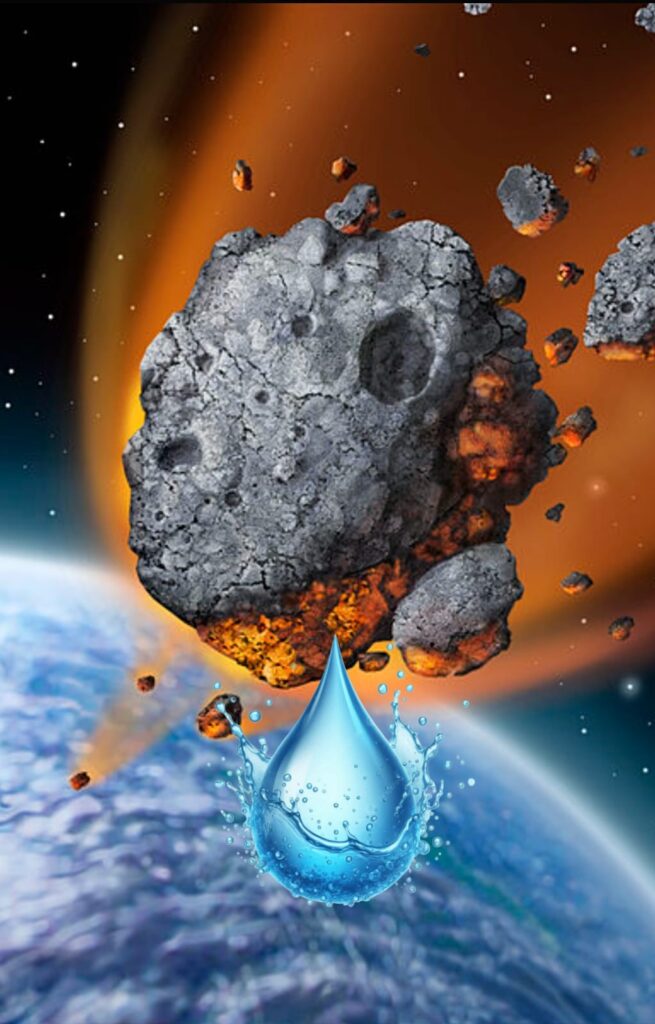
However, conditions began to change as the solar system evolved. Asteroids rich in ice migrated inward from colder regions beyond Jupiter. Many of these bodies collided with Earth at high speed. As a result, their ice melted and accumulated on the cooling surface.
Isotopic Evidence
Crucially, scientists compared hydrogen isotopes in asteroid samples with those found in Earth’s oceans. The ratios closely matched. In particular, levels of deuterium provided compelling confirmation. This chemical signature strongly links Earth’s water to extraterrestrial sources.
Era of Intense Bombardment
Around 3.9 billion years ago, Earth experienced a period known as the Late Heavy Bombardment. During this phase, countless asteroids and cosmic fragments struck the planet. Consequently, water reserves expanded rapidly. Over time, stable oceans began to form.
Role of Giant Planets
Meanwhile, the shifting orbits of Jupiter and Saturn played a decisive role. Their gravitational forces redirected icy debris toward the inner solar system. Earth, by chance, lay in the path of this cosmic traffic. Therefore, planetary instability elsewhere proved beneficial for Earth.
Cooling and Habitability
In addition, the influx of water helped cool Earth’s surface. Temperatures gradually stabilized. This transformation created conditions suitable for chemical reactions essential to life. Eventually, early biological processes took hold in these newly formed oceans.
Revising Earlier Estimates
Previously, scientists believed only a small fraction of Earth’s water came from asteroids. The latest analysis challenges that view. It suggests that a majority of Earth’s water may have extraterrestrial origins. This represents a major shift in scientific understanding.
Implications Beyond Earth
The study also has wider implications. It strengthens the possibility that water may exist on other rocky planets. Mars, in particular, may have followed a similar path. Consequently, the findings will guide future planetary exploration and the search for life.
A Scientific Milestone
Overall, the research marks a significant milestone in planetary science. It resolves long-standing uncertainties about Earth’s past. At the same time, it opens new directions for studying water across the solar system.