

- Engineers Train Machines Tirelessly
- Physical Intelligence Takes Shape
- A New Robotics Push
Article Today, Hyderabad:
Open AI, known globally for transforming artificial intelligence through ChatGPT, is now preparing a major push into robotics. The company is training robots to perform everyday household tasks that require physical understanding. These efforts mark a shift from purely digital intelligence to real-world machine capability.
Inside a Secret Lab
The work is being carried out in a restricted laboratory in San Francisco. The facility operates around the clock. Engineers and data collectors work in multiple shifts to train robotic systems. The lab reportedly sits within a company building used for financial operations, keeping the research away from public attention.
Teaching Human Movements
At the centre of the project is the effort to teach robots how humans move. Robotic arms are guided using three-dimensional printed controllers. When a human operator moves the controller, the robot mimics the action precisely. Cameras record every movement. This data is later used to train the robots to repeat tasks independently.
Inside a Secret Lab
The work is being carried out in a restricted laboratory in San Francisco. The facility operates around the clock. Engineers and data collectors work in multiple shifts to train robotic systems. The lab reportedly sits within a company building used for financial operations, keeping the research away from public attention.
Teaching Human Movements
At the centre of the project is the effort to teach robots how humans move. Robotic arms are guided using three-dimensional printed controllers. When a human operator moves the controller, the robot mimics the action precisely. Cameras record every movement. This data is later used to train the robots to repeat tasks independently.
From Simple to Complex Tasks
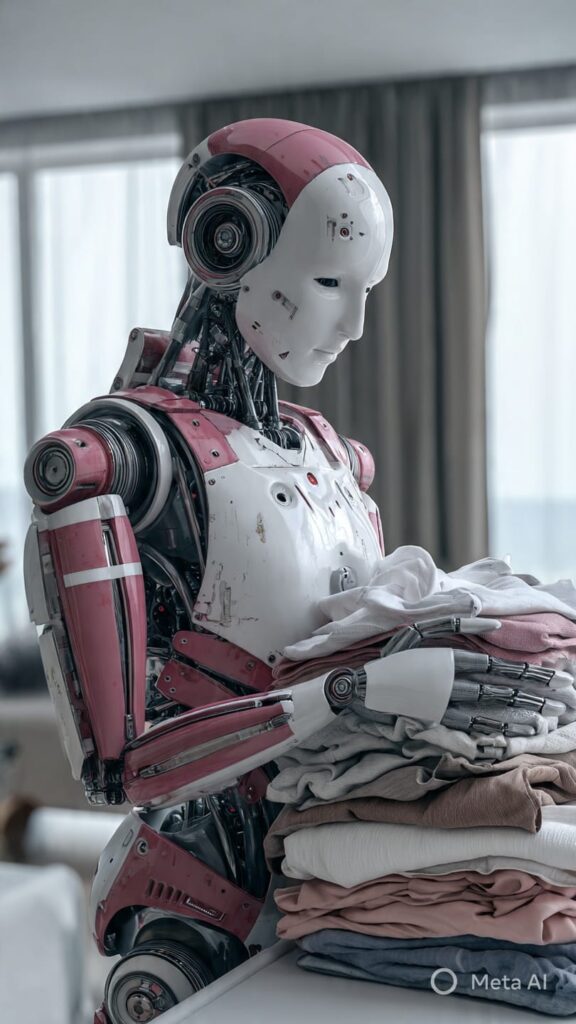
Training began with basic actions such as placing sugar into a cup kept a short distance away. Over time, the robots progressed to more complex activities. These include folding clothes, making toast, preparing flatbreads and even sweeping floors. Meanwhile, engineers focus on improving accuracy and consistency in each task.
Data Over the Internet
Unlike language models that learn from online text, robots require physical data. They must understand grip, pressure and balance. Therefore, OpenAI is collecting thousands of hours of real-world motion data. This approach allows machines to learn by imitation, much like humans do.
A Strategic Return
OpenAI had earlier shut down its robotics programme in 2020 after demonstrating a robotic hand solving a Rubik’s Cube. However, the company later prioritised generative AI systems. In contrast, firms such as Tesla have continued building large humanoid robots. OpenAI has now returned to robotics with a focus on everyday utility rather than scale.
Altman’s Long-Term Vision
Company chief Sam Altman has consistently spoken about building systems that think and act like humans. Experts believe this renewed effort reflects that goal. In addition, researchers say such robots could eventually assist people in homes, especially with routine and repetitive work.
Towards Human-Like Machines
As training expands, Open AI aims to make robots more natural and reliable. The company believes physical intelligence is the next frontier of artificial intelligence. If successful, these machines may soon move from secret labs into ordinary households, changing daily life in subtle but significant ways.