- Banned Memoir Triggers Uproar
- Galwan Questions Resurface Sharply
- A Book That Shook Delhi
Article Today, Hyderabad:
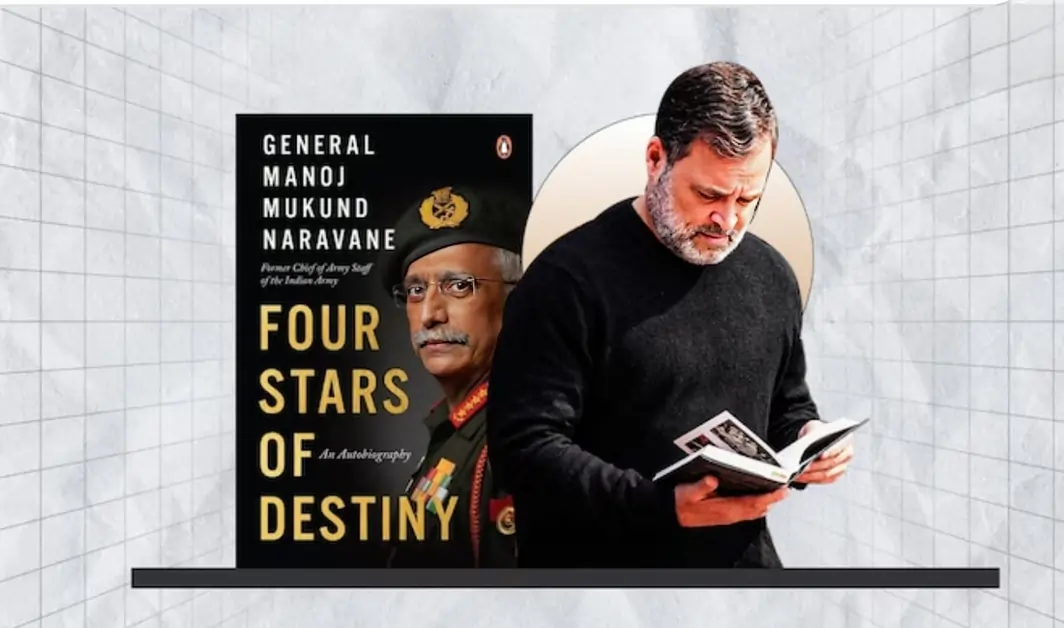
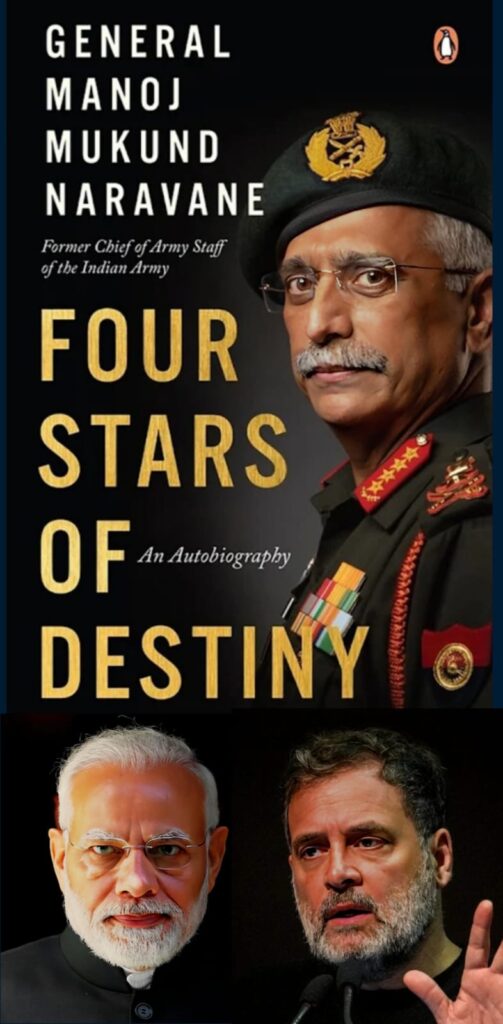
A political controversy has erupted following the circulation of The Four Stars of Destiny, a memoir by former Army Chief M. M. Naravane. The book, which reportedly did not receive formal clearance from the defence establishment, has drawn national attention after excerpts surfaced in the public domain. Its contents raise questions about military decision-making, political accountability and defence reforms during a turbulent period.
The publication has intensified debate in Parliament and beyond. Opposition leaders argue that the memoir contains serious disclosures. The government has not issued a detailed public rebuttal so far.
Galwan Under Scrutiny
One of the most sensitive sections relates to the clash in the Galwan Valley on 15 June 2020, in which 20 Indian soldiers lost their lives. According to reported excerpts, Naravane suggests that clear political directives were lacking during the escalation. He indicates that operational discretion was left to military commanders amid rapidly changing ground conditions.
However, the government has consistently maintained that the armed forces responded with professionalism and resolve. Officials have earlier stated that India took necessary steps to safeguard territorial integrity. The memoir’s account has nevertheless revived questions about the chain of command and crisis communication at the highest level.
Silence And Accountability
The book also alludes to discussions between senior military leaders and the political executive during the border crisis. It reportedly describes moments when decisive guidance was not forthcoming. These claims have prompted opposition parties to question the role of Prime Minister Narendra Modi and Defence Minister Rajnath Singh during the episode.
Meanwhile, government supporters argue that sensitive operational matters should not be politicised. They contend that national security decisions often require confidentiality.
Agnipath Debate Reignited
In addition, the memoir reportedly criticises aspects of the Agnipath recruitment scheme. Naravane is said to have expressed reservations about limiting long-term retention to a quarter of recruits. He reportedly warned that such a structure could affect institutional continuity within the armed forces.
The Agnipath scheme, introduced in 2022, aims to create a younger and leaner military profile. The government has defended it as a reform necessary for modernisation. However, the memoir’s remarks have reopened debate among veterans and youth groups.
Rahul’s Disclosure
The controversy intensified when Congress leader Rahul Gandhi displayed a copy of the book in Parliament. He claimed that although the publication faced official hurdles, copies were accessible abroad and online. His intervention shifted the debate from policy to transparency.
Subsequently, questions emerged about how the manuscript entered circulation without formal clearance. Reports indicate that authorities are examining whether any procedural violations occurred in the publication process.
Wider Security Concerns
The memoir reportedly touches on the 2017 Doklam standoff as well. It describes the strategic challenges posed by Chinese infrastructure development near contested areas. These passages have drawn attention to long-standing border tensions between India and China.
However, defence analysts caution that autobiographical accounts reflect individual perspectives. They argue that such narratives must be read alongside official records and institutional responses.
Political And Institutional Impact
The unfolding controversy places the government under renewed scrutiny. It also raises broader questions about civil-military relations and transparency in matters of national security. Therefore, the debate now extends beyond one book.
As Parliament prepares for further discussions, the memoir continues to circulate widely. Whether it alters public perception or policy direction remains uncertain. What is clear, however, is that the Naravane diary has reopened unresolved questions about leadership, accountability and the cost of conflict.
Bolloju Ravi, Senior Journalist