
- Algorithms Drive Lethal Precision
- Drones Extend Strategic Reach
- Data Reshapes Global Security
- Data as Strategic Weapon
Article Today, Hyderabad:
Artificial intelligence (AI) is rapidly transforming modern intelligence systems. Governments now rely on vast streams of digital data to assess threats and track movements. What once required physical surveillance now depends on algorithms, sensors and real-time analytics. As a result, data has become a strategic asset in geopolitical competition.
The United States, through agencies such as the Central Intelligence Agency and the Pentagon, has significantly expanded its technological capabilities over the past decade. These systems integrate satellite imagery, intercepted communications and open-source intelligence. Officials argue that such tools enhance national security and counterterrorism operations. Critics, however, warn that unchecked digital surveillance risks eroding global privacy norms.
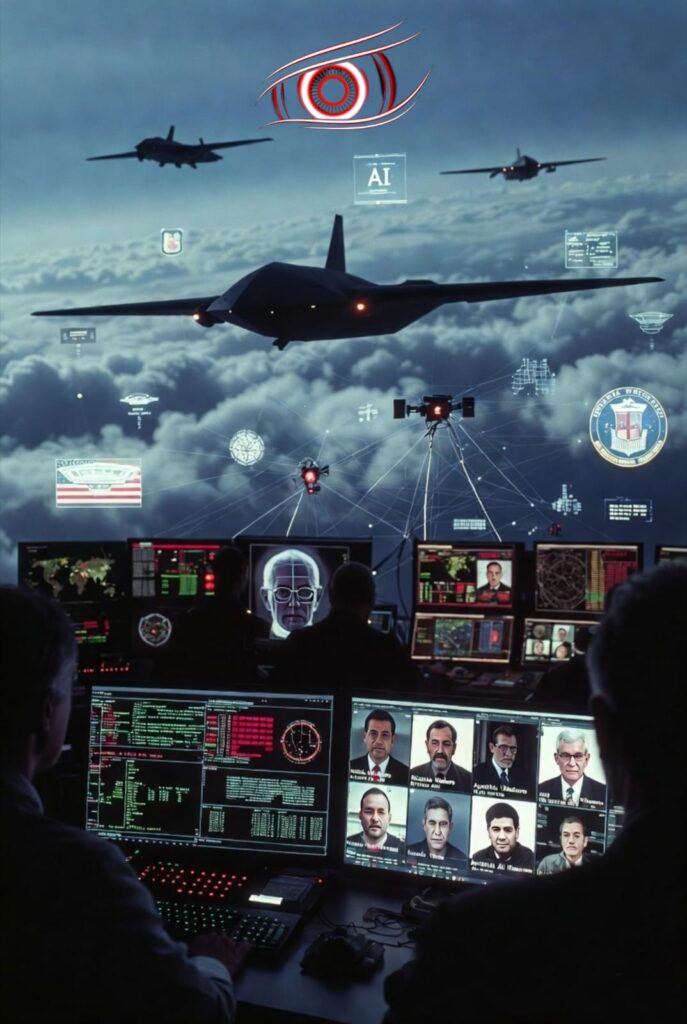
Sensors and Civilian Infrastructure
Modern surveillance no longer depends solely on covert field agents. Instead, digital infrastructure plays a central role. Smartphones, smart cameras, biometric databases and traffic management systems generate continuous streams of metadata. Intelligence analysts use machine learning models to detect patterns within this information.
However, experts caution that most civilian devices are operated by private companies. Access to such data typically requires legal authorisation or cybersecurity penetration. Allegations of large-scale unauthorised backdoor access remain politically sensitive and difficult to independently verify. Nevertheless, cybersecurity specialists acknowledge that vulnerabilities in software supply chains can be exploited by state actors.
Real-Time Tracking Capabilities
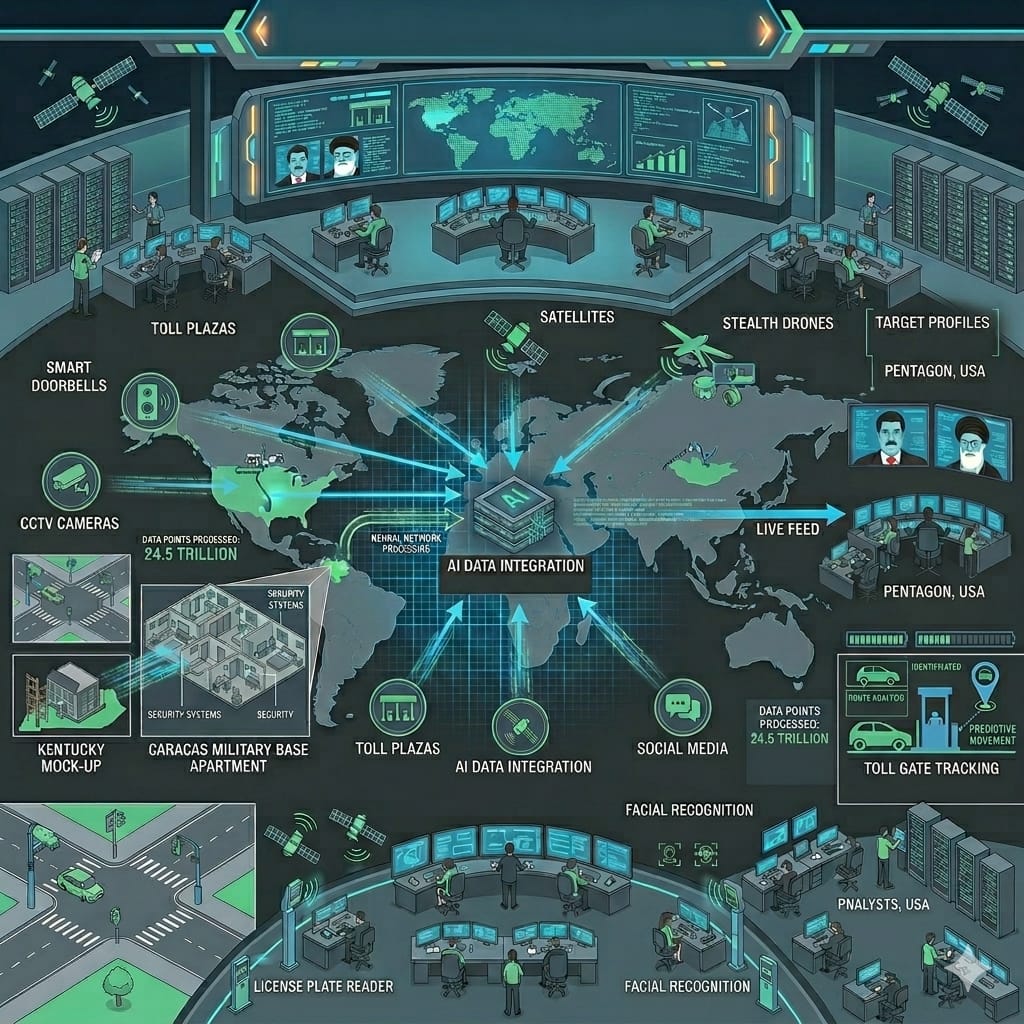
Advanced facial recognition and geolocation tools have improved precision targeting. High-resolution satellite constellations and unmanned aerial vehicles can track vehicles and individuals across borders. The United States operates a range of stealth drone platforms capable of long-endurance missions. These systems combine AI-driven object recognition with live intelligence feeds.
Meanwhile, other major powers, including China and Russia, are investing heavily in similar technologies. As a result, AI-enabled reconnaissance has become a core component of modern military doctrine. Analysts describe this shift as a move toward “persistent surveillance”, where movements are continuously monitored rather than periodically observed.
Political Fallout and Claims
Recent online narratives have linked such surveillance systems to dramatic claims about foreign leaders being tracked or targeted. For example, social media posts have speculated about operations involving Venezuelan President Nicolás Maduro and Iran’s Supreme Leader Ali Khamenei. However, there is no verified public evidence supporting reports of arrests or assassinations conducted through AI-driven targeting in these cases.
Independent verification remains critical. Governments rarely disclose operational details of intelligence missions. Therefore, analysts advise caution when evaluating claims that cannot be substantiated through credible sources.
Ethical and Legal Questions
The expansion of AI in warfare has raised serious ethical concerns. International humanitarian law requires distinction, proportionality and accountability in armed conflict. Human rights groups argue that algorithmic targeting systems may obscure responsibility when mistakes occur.
In addition, privacy advocates warn that mass data collection could normalise intrusive monitoring. Democratic oversight mechanisms vary widely across countries. While some nations have parliamentary or judicial review of intelligence agencies, others operate with limited transparency.
A Digital Security Order
The global security landscape is shifting toward data-centric operations. Technology firms, defence contractors and intelligence agencies now work at unprecedented levels of integration. As geopolitical rivalry intensifies, digital infrastructure has become both a battlefield and a weapon.
However, experts stress that AI systems remain tools shaped by human decision-making. Their impact depends on policy frameworks, international norms and oversight structures. As governments balance security with civil liberties, the debate over digital surveillance is likely to define the next phase of global politics.
Bolloju Ravi, Sr.Journalist