
- Ticket Prices Rise Sharply
- Routes Shift, Flights Cancelled
- War Hits Aviation Routes
Article Today, Hyderabad:
The ongoing war involving Iran has disrupted global aviation networks. Air corridors across parts of West Asia have become unsafe. Airlines are now avoiding key routes. As a result, flight paths between Asia and Europe have grown longer and more complex. This has increased both operational strain and travel time.
Fares Climb Steeply
Air ticket prices have risen sharply across major international routes. A round trip from Delhi to London, once priced near Rs.62,300, now costs up to Rs.1,45,000. Similarly, fares from Mumbai to Paris have doubled to around Rs.1,12,000. From Hyderabad to Frankfurt, passengers are paying nearly Rs.1,28,000. The surge reflects both reduced capacity and rising costs.
Extreme Spikes On Key Routes
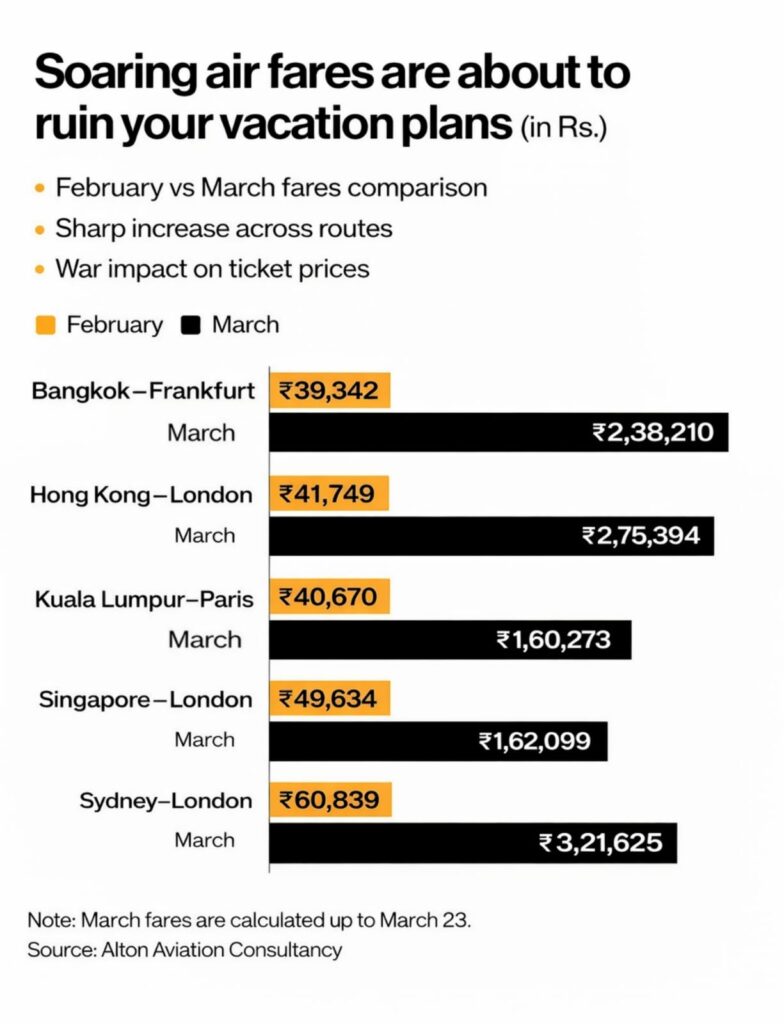
Some long-haul routes have recorded extraordinary increases. Flights from Hong Kong to London have seen fares jump from Rs.41,500 to over Rs.2,75,000. This marks a rise of more than five times. Meanwhile, Sydney to London fares have doubled to about Rs.1,24,500. These trends indicate severe pressure on global aviation pricing.
Fuel Costs Drive Inflation
Jet fuel prices have surged since the escalation of conflict. In Singapore, prices rose by nearly 180 percent within days. Fuel, which accounts for about one-third of airline operating costs, is now significantly more expensive. Airlines are passing this burden directly to passengers through higher fares and surcharges.
Flights Cancelled Worldwide
In addition, safety concerns have forced airlines to cancel large numbers of flights. Around 70,000 services have reportedly been suspended globally. Major transit hubs such as Dubai, Abu Dhabi and Doha have seen operations fall by nearly half. Reduced availability has intensified demand on remaining flights, further pushing up ticket prices.
Longer Routes, Higher Costs
Meanwhile, airlines are rerouting flights to avoid conflict zones. These detours increase flying time and fuel consumption. Consequently, operational costs rise further. Airlines are also deploying additional aircraft on alternative routes, which adds to logistical challenges.
Tourism Sector Under Strain
The impact is spreading beyond aviation. International tourism has begun to slow. Bookings from Europe to the United States have dropped by around 15 percent. Travel from Asia to Europe has also declined. Higher costs are discouraging leisure and business travel alike.
Airlines Impose Surcharges
Therefore, airlines are introducing new fuel surcharges. Several carriers have increased ticket prices by up to 15 percent. Others are adding fixed charges ranging from Rs.1,500 to Rs.12,000 depending on distance. These measures aim to offset rising fuel and operational expenses.
Outlook Remains Uncertain
However, industry experts expect volatility to continue in the coming months. The crisis may persist at least until October if tensions do not ease. Until then, passengers are likely to face high fares, limited availability, and longer travel durations.