- Broadcast Licences Become Political Weapon
- War Coverage Tests Press Freedom
- Anger Over War Narratives
Article Today, Hyderabad:
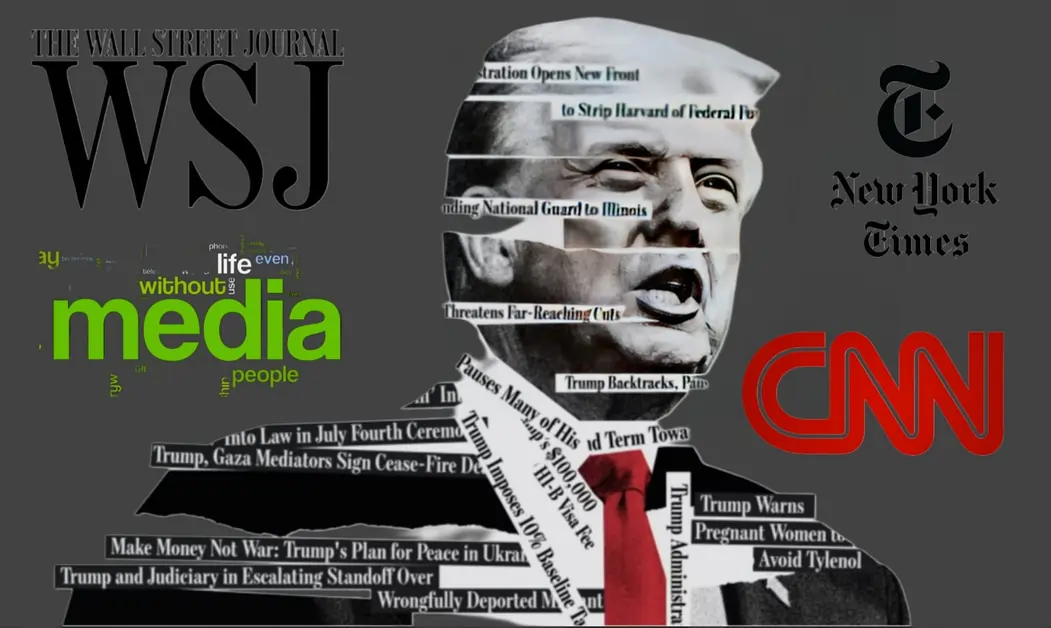
War often brings more than explosions. It also brings battles over truth. In the United States, a new confrontation is unfolding between the government and the media. President Donald Trump has expressed deep frustration over war coverage by major American news organisations. The tension has grown sharper in recent days. Reports about military developments in the Middle East triggered strong reactions from the White House. As a result, relations between the administration and journalists appear increasingly strained.
Government Signals Pressure
Meanwhile, the Federal Communications Commission is signalling a tougher stance. FCC chairman Brendan Carr warned that broadcasters must respect public interest obligations. He suggested that licences could face scrutiny if networks deliberately spread misleading information. Such remarks have raised concerns across the media industry. Broadcasters see licence regulation as a powerful lever. Therefore, any threat linked to licensing immediately carries serious consequences.
Triggering Report Controversy
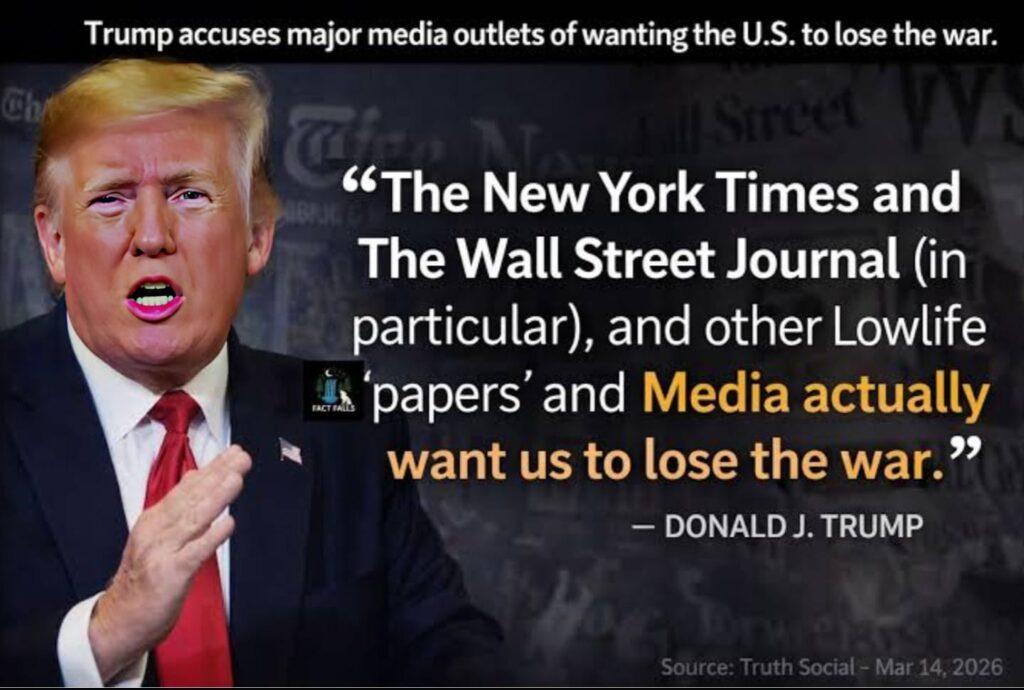
The immediate dispute centres on a report by The Wall Street Journal. The newspaper said that five American refuelling aircraft stationed in Saudi Arabia were targeted in an attack. President Trump rejected the report strongly. On social media, he accused sections of the media of distorting war realities. According to him, certain outlets appear eager to project American weakness. His comments quickly intensified the political storm.
Defence Leadership Joins Criticism
In addition, senior defence officials have echoed similar concerns. Defence Secretary Pete Hegseth criticised coverage by CNN during a press briefing. He argued that some reporting creates confusion during sensitive military operations. Hegseth suggested that the network’s editorial direction could change in the near future. His remarks referred to possible ownership changes involving billionaire David Ellison. However, the broader implication was clear. The administration believes media narratives are shaping public perception of the war.
Silence From Media Houses
Meanwhile, media organisations have largely maintained silence. Dow Jones & Company, publisher of The Wall Street Journal, has not issued a formal response. Other networks also avoided direct confrontation with the government. The absence of immediate replies leaves several questions unanswered. Observers wonder whether media houses are preparing legal or editorial responses behind the scenes.
Press Freedom Under Strain
Therefore, the dispute is becoming larger than one news report. It now touches the wider question of press freedom during wartime. Governments often argue that national security demands responsible reporting. Journalists, however, emphasise the public’s right to know. The balance between these two principles is rarely simple.
War’s New Information Front
In modern conflicts, information travels faster than missiles. Newsrooms, social media platforms, and government briefings all compete to shape the narrative. Consequently, war reporting itself becomes a battlefield. The current confrontation in the United States reflects that reality. As tensions continue, the relationship between power and the press will face another difficult test.
Bolloju Ravi, Senior Journalist