

- AI Simulates Deceased Users
- Meta Patent Sparks Debate
- Privacy and Consent Concerns
- Extending Presence Beyond Death
Article Today, Hyderabad:
Advances in artificial intelligence are reshaping how digital identities persist after death. Meta Platforms, led by Mark Zuckerberg, has developed systems that can simulate the online presence of deceased users. These tools rely on past posts, messages, and behavioural data. The stated aim is to preserve digital memories. However, the concept has triggered ethical and legal scrutiny across multiple jurisdictions.
Patent and Platform Design
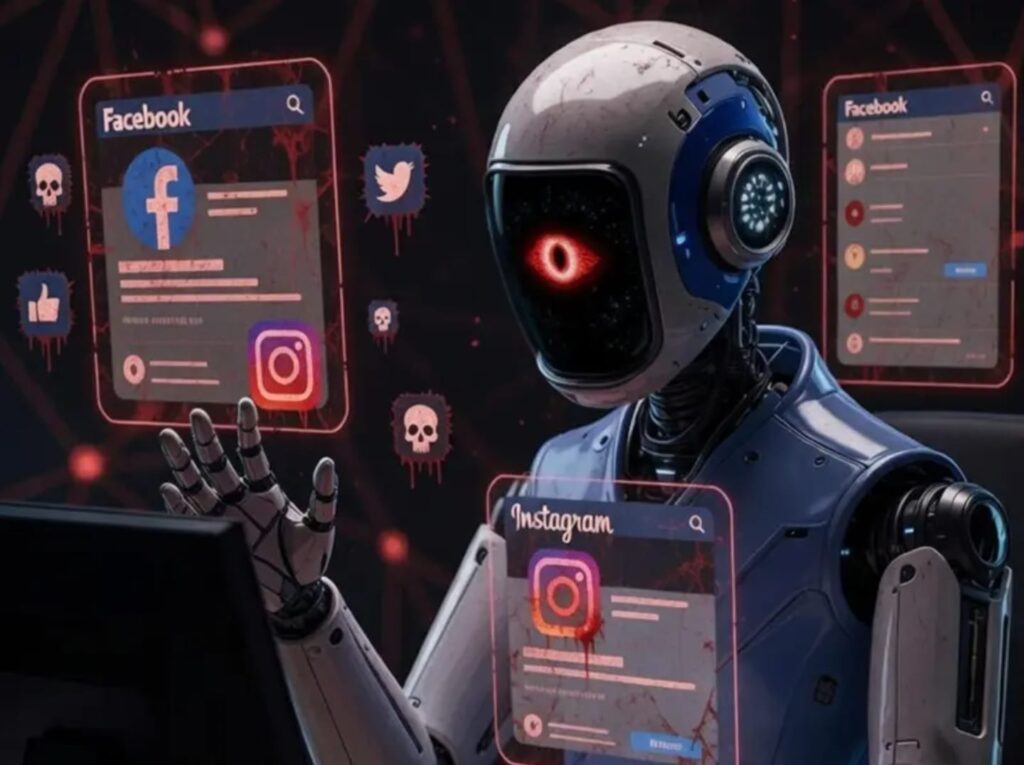
In December 2025, Meta secured a patent describing technology that enables automated responses on behalf of users who are inactive or deceased. The patent builds on an application filed earlier. The system analyses historical data to generate text in a user’s typical style. It can operate across platforms such as Facebook and Instagram. Consequently, an account may continue interacting even after the individual’s death.
Algorithmic Reconstruction
The system studies linguistic patterns, emotional tone, and interaction history. It then produces replies that resemble the original user’s communication style. In effect, the technology creates a digital replica based entirely on stored data. While this may comfort grieving families, it also transforms personal memory into an algorithmic product. Therefore, the boundary between remembrance and simulation becomes blurred.
Commercial Incentives
Digital memorialisation carries significant commercial potential. Services that simulate deceased individuals are often referred to as “griefbots.” These systems can be offered as premium features. Target audiences include families seeking emotional continuity. However, critics argue that monetising grief risks exploitation. Ethical scholars warn that emotional vulnerability may drive impulsive adoption without informed consent.
Consent and Ownership
A central question concerns data rights after death. It remains unclear who controls a person’s digital footprint once they pass away. Platform policies vary across countries. In addition, most users do not explicitly authorise posthumous AI simulation. Therefore, consent becomes ambiguous. Legal frameworks have not yet fully addressed this scenario.
Psychological and Social Impact
Mental health experts caution that AI-generated simulations may complicate the grieving process. Continuous digital interaction could delay emotional closure. Meanwhile, realistic audio or video generation may intensify attachment. Deep learning models can now replicate voice patterns and facial expressions with high fidelity. This capability raises concerns about misuse, impersonation, and reputational harm.
Privacy and Security Risks
Data stored on social media platforms remains vulnerable to breaches or unauthorised access. If AI systems continue operating a deceased user’s account, accountability becomes difficult to assign. Moreover, automated responses may misrepresent the individual’s beliefs or intentions. Therefore, oversight mechanisms must evolve alongside technical capability.
Regulatory Crossroads
Governments worldwide are examining AI governance frameworks. However, posthumous digital identity remains a grey area. Transparency, consent protocols, and data deletion rights require clearer standards. Meanwhile, companies continue to invest in immersive digital experiences. The tension between innovation and ethical restraint persists.
Digital afterlife technologies promise continuity. Yet they also redefine personal identity in profound ways. As AI systems grow more sophisticated, societies must confront fundamental questions about memory, autonomy, and the limits of technological intervention.