
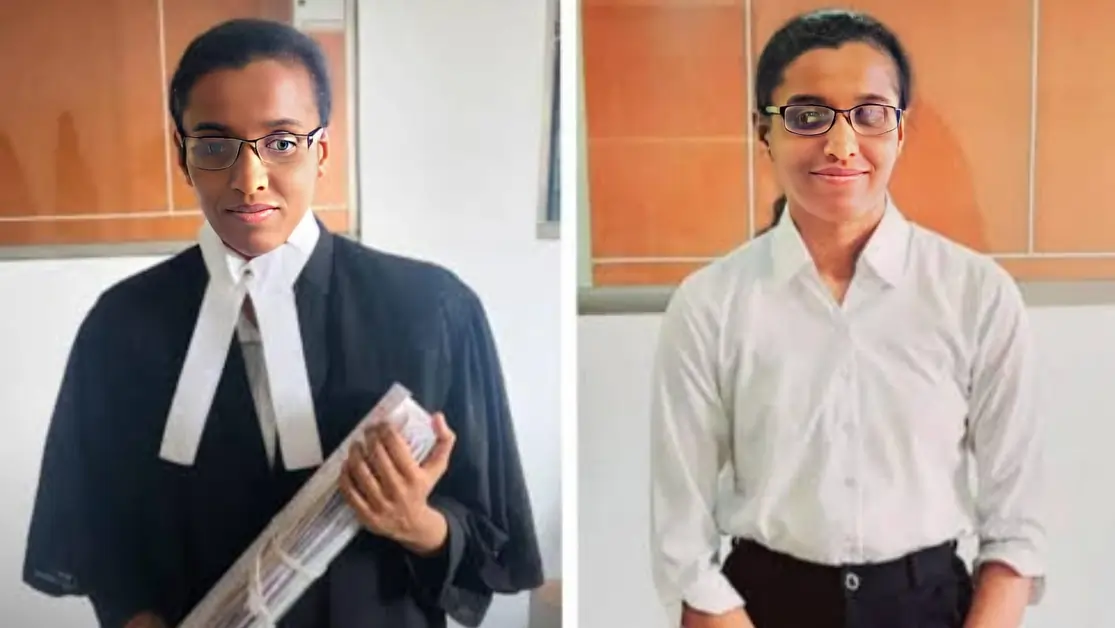
- Judicial Service Exam Success
- Milestone for Inclusive Judiciary
- A Historic Appointment
Article Today, Kerala:
A new chapter has opened in Kerala’s judicial history with Dhanya Nathan set to assume office as the State’s first blind woman judge. Selected as a Civil Judge (Junior Division), her appointment marks a significant moment for inclusivity in the justice delivery system. Her success reflects evolving attitudes within institutions towards persons with disabilities.

Journey Shaped by resolve
Born with 100 per cent visual impairment, Ms. Nathan pursued law with unwavering determination. She chose the legal profession with the intent of supporting those facing injustice. Despite the challenges posed by blindness, she completed her studies through sustained effort and discipline. Her preparation involved long hours of study and strict adherence to routine.
Excellence in Competitive Examination
The Kerala Judicial Service examination is considered demanding even for candidates without disabilities. However, Ms. Nathan cleared the Civil Judge (Junior Division) examination with a high rank, securing a place in the merit list. Her performance surprised many and drew attention to the capabilities of visually impaired candidates when provided with reasonable support.
Use of Assistive Technology
During her preparation, Ms. Nathan relied extensively on Braille materials and audio-based software. She accessed statutes, case laws, and commentaries through assistive technologies. In addition, she adapted to modern courtroom requirements by familiarising herself with digital tools used for drafting orders and judgments.
Legal Backing and Policy Shift
Her selection aligns with Supreme Court rulings that prohibit discrimination against persons with disabilities in judicial appointments. The decision reinforces the principle that physical disability alone cannot be grounds for denying public employment. Therefore, her appointment is being viewed as part of a broader policy shift towards equal opportunity.
Human Perspective in Judging
Nathan has stated that her personal experiences will guide her sensitivity on the Bench. She believes that understanding social barriers faced by vulnerable groups is essential for fair adjudication. However, she has emphasised that her judgments will be grounded strictly in law and facts, maintaining judicial impartiality.
Support System Behind Success
Family members and friends played a crucial role in her journey. They assisted her by reading out study material and supporting her during examinations. Meanwhile, educators and peers acknowledged her discipline and perseverance throughout her academic and preparatory years.
A Wider Message of Inclusion
In the same examination results, another candidate with cerebral palsy secured a high rank, highlighting a broader trend. Together, these successes signal gradual but meaningful change within Kerala’s public institutions. For many aspiring candidates with disabilities, Ms. Nathan’s achievement stands as a powerful example.
Inspiration Beyond the Courtroom
At a time when technological reforms are reshaping the Indian judiciary, her entry assumes added significance. Her journey underlines that limitations of the body do not define the limits of ambition. As she prepares to take charge, Dhanya Nathan emerges as a symbol of resilience and equal access to justice.