
Article Today, Hyderabad:
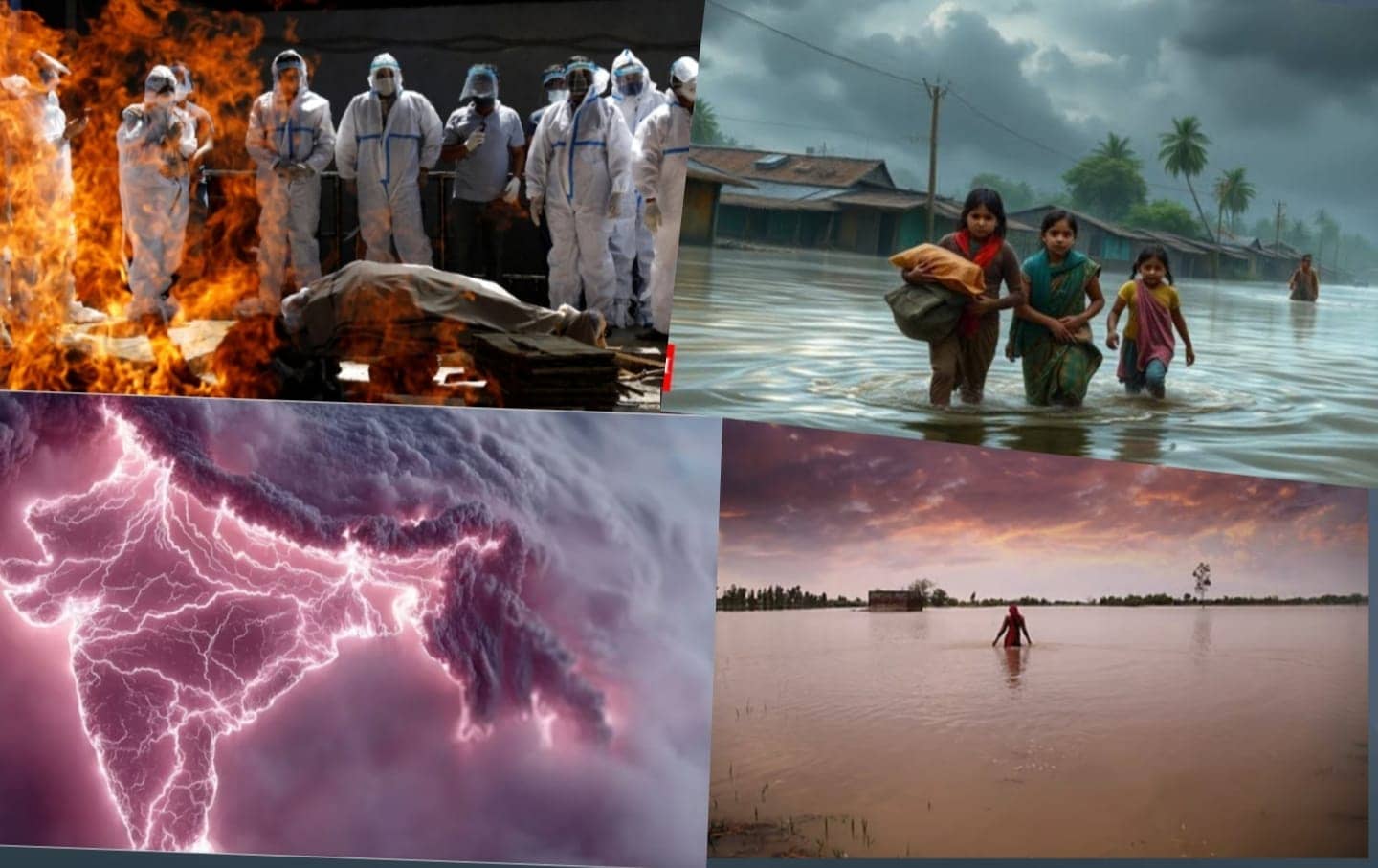
Extreme events appear to be repeating in disturbing cycles across a 100 years. The Spanish Flu of 1918 devastated the world, infecting nearly 500 million people and causing millions of deaths. A similar global tragedy unfolded in 2019 with the COVID-19 pandemic, which left an enduring scar on families and economies. Scientists now warn that climate disasters are following a similar trajectory of intensifying repetition.
Alarming Findings of the 2025 Report
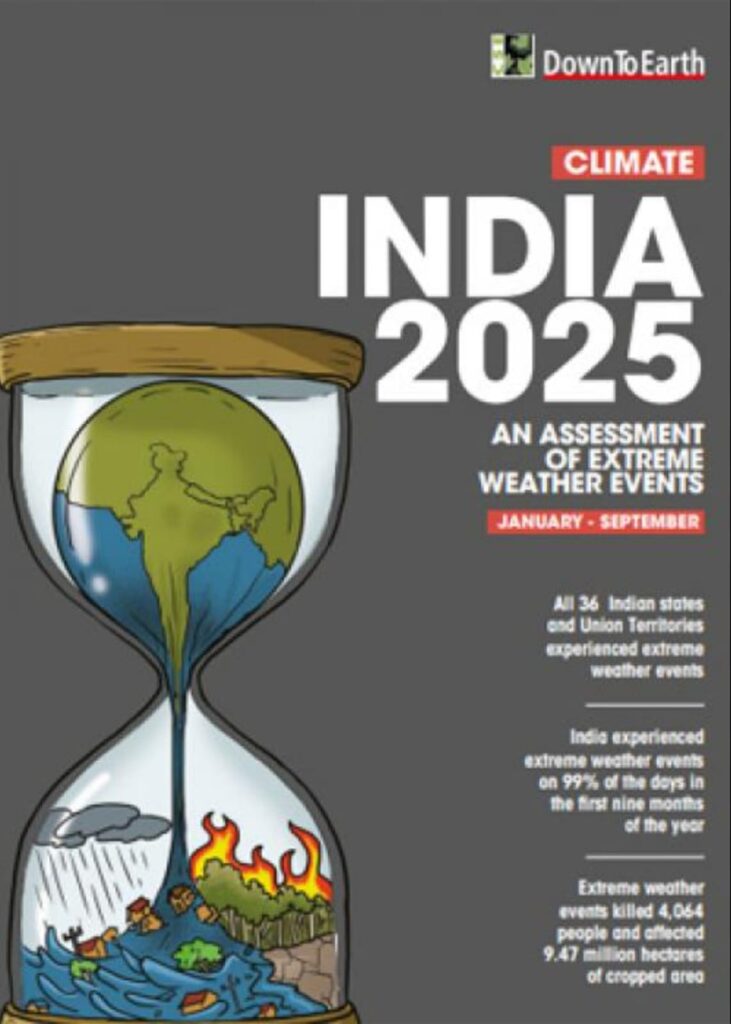
The Climate India 2025 report, released by the Union Government, presents a grim picture of the country’s environmental future. According to the report, nearly 99% of the days in the first nine months of this year witnessed at least one extreme weather event somewhere in India. In the previous two years, such conditions were recorded on more than 320 days each year, indicating a steady escalation in climate volatility.
Weather Records Shattered Nationwide
Several long-standing meteorological records were broken in 2025. January emerged as the fifth driest month since 1901. February was recorded as the hottest month in 124 years. September also ranked among the warmest on record in terms of average temperature. Scientists have attributed these shifts largely to human-driven climate change.
Spread of Unusual Climate Phenomena
Unprecedented weather phenomena are now being reported in regions once considered climatically stable. Cloudbursts have been recorded in Chennai and parts of Andhra Pradesh, areas that rarely experienced such events earlier. At the same time, severe drought conditions have tightened their grip over parts of northeast India. These shifts highlight the growing unpredictability of the climate system.
Heavy Toll on Human Life
The impact of extreme weather has been devastating. Between January and September this year, 4,064 people lost their lives due to climate-related disasters. Of these, 2,440 deaths resulted from heavy rainfall, floods, and landslides. Lightning strikes and storms claimed 1,456 lives, while cloudbursts accounted for 135 fatalities.
Massive Agricultural and Property Loss
The economic consequences have been equally severe. Over 2.34 crore acres of crops were damaged across the country. Nearly one lakh houses were destroyed. In addition, 58,982 livestock perished in weather-related incidents, deepening the distress of rural households already under pressure.
States Bearing the Brunt
Among the worst-affected States, Madhya Pradesh recorded the highest number of fatalities at 532, followed by Andhra Pradesh with 484 and Jharkhand with 478. These figures have raised serious concerns about the preparedness and response mechanisms of State disaster management authorities.
Call for Rethinking Development
Sunita Narain, Director General of the Centre for Science and Environment, has warned that climate change alone cannot be blamed for the scale of destruction. She stated that development models that neglect environmental sustainability are equally responsible. She urged policymakers to redefine development with climate resilience at its core.
An Urgent Warning for the Future
The findings of the Climate India 2025 report serve as a stark warning. As extreme events grow more frequent and intense, experts stress that delay in climate action will only magnify human and economic losses in the years ahead.