Article Today, Hyderabad:
The recent political developments in Bihar have once again brought the gender disparity within political families to the forefront. The Rashtriya Janata Dal’s electoral defeat triggered internal tensions, leading to Lalu Prasad Yadav’s daughter, Rohini Acharya, stepping away from the family home. Despite the presence of her father and brothers, she appeared to be the first to face criticism, exposing a culture in which women are held accountable for political setbacks more readily than men.
A Tradition of Unequal Treatment
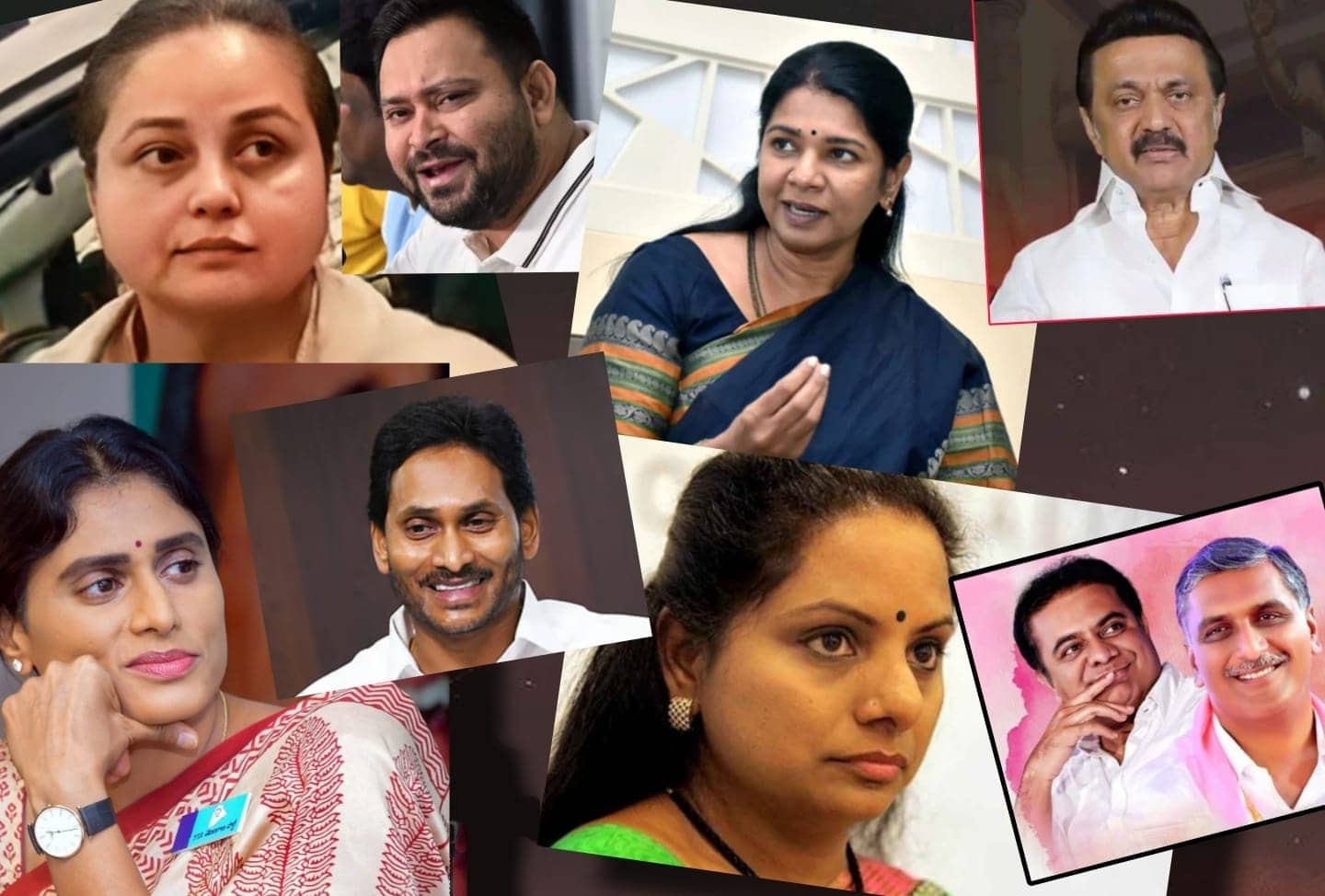
Across the country, female members of political families continue to experience disproportionate scrutiny. Sons receive repeated opportunities even after electoral failures. Their mistakes are defended or dismissed. However, daughters who raise concerns or make minor errors are often labelled as dissenters. The ongoing experiences of Rohini Acharya echo the challenges earlier faced by leaders such as Y.S. Sharmila and K. Kavitha. Their struggle illustrates the psychological and institutional pressures women encounter within political dynasties.
A National Phenomenon
This issue is not limited to one party or one state. From Kashmir to Kanyakumari, similar patterns persist. Sonia Gandhi’s political journey demonstrated how gendered perceptions influenced critical decisions, including her exclusion from assuming the Prime Minister’s post in 2004. In Tamil Nadu, Kanimozhi’s political space has been overshadowed by male leadership within her party. Former Chief Minister Jayalalithaa, too, faced resistance and personal attacks from both her own party and opposition groups during her rise to power.
Challenges in Telugu States
In the Telugu region, the trajectories of Y.S. Sharmila and K. Kavitha present clear examples. Sharmila played a crucial role in sustaining the party during her brother Jagan Mohan Reddy’s incarceration and mobilised support through extensive outreach. After the party came to power, her political space gradually diminished. In Telangana, Kavitha, who had organised large-scale cultural programmes and youth outreach through Telangana Jagruthi, faced internal criticism and eventual marginalisation. Their experiences reflect a broader reluctance to recognise women as legitimate heirs in political families.
Changing Dynamics Ahead
Despite these challenges, signs of change are emerging. Rohini Acharya’s recent stand has ignited debates on gender equity within political legacies. Similar voices may gain strength in the coming years. Leaders such as Supriya Sule in Maharashtra and Kanimozhi in Tamil Nadu are increasingly asserting their political identity and rights. If current trends continue, more women from established political families may seek equitable roles, challenging long-standing patriarchal structures.
Towards a Broader Shift
The developments in Bihar may serve as a precursor to a larger movement. As women demand rightful representation within their own families, political parties may be compelled to confront the gender bias embedded in their organisational cultures. The growing mobilisation and confidence among women in public life suggest that a significant transformation in political inheritance and leadership norms may be on the horizon.