

Article Today, Pakistan:
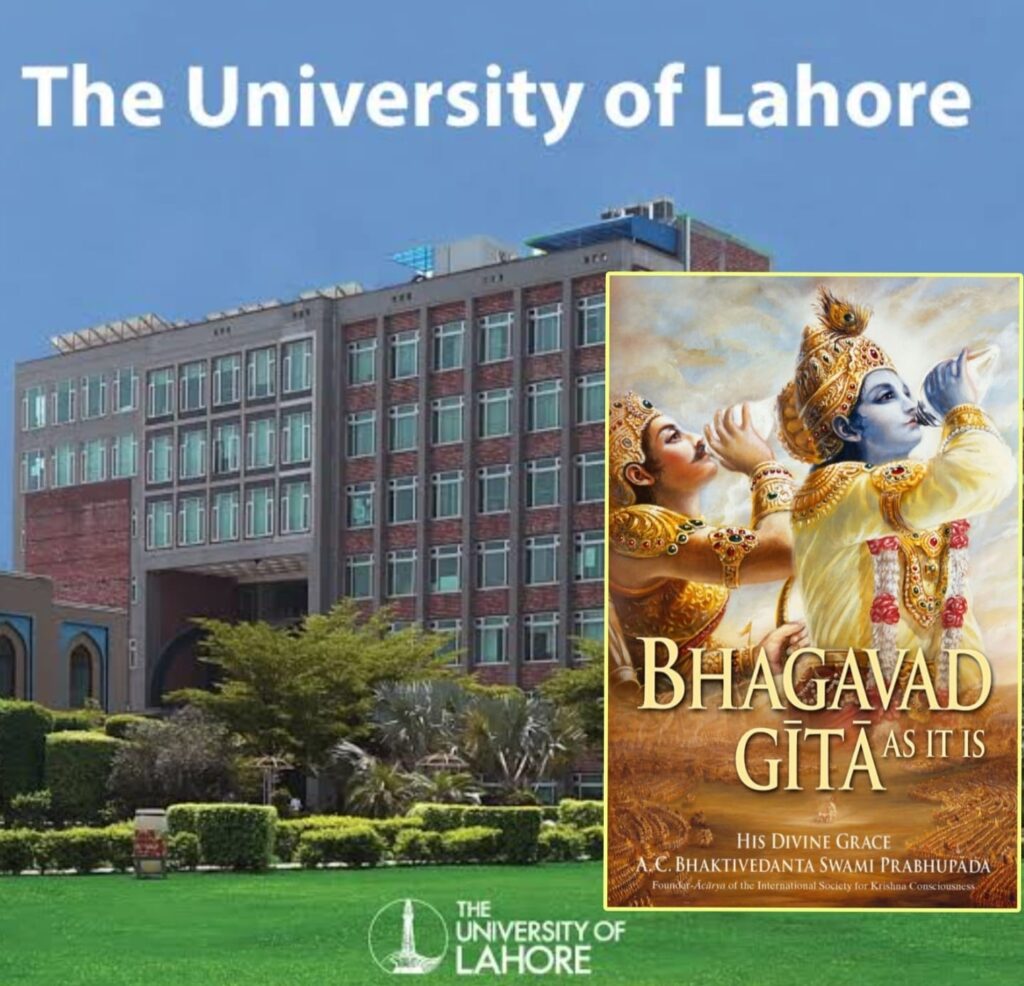
The Lahore University of Management Sciences has begun teaching Sanskrit, marking a rare academic development in Pakistan. The programme has been introduced under the university’s humanities framework, with the stated aim of engaging with classical texts in their original language.
From Workshop to course
Initially launched as a three-month weekend workshop, the Sanskrit classes drew unexpected interest from students and researchers. However, due to sustained demand, the university converted the initiative into a full four-credit course within a short span.
Academic Leadership
The programme is being conducted under the guidance of Gurmani Centre Director Ali Usman Qasmi and sociology professor Shahid Rasheed. Both faculty members have emphasised that Sanskrit studies are approached as an academic and cultural subject rather than a religious one.
Focus on Classical Texts
The course introduces students to foundational Sanskrit literature, including texts such as the Bhagavad Gita and the Mahabharata. According to the faculty, the objective is to enable future scholars to study South Asian intellectual traditions through primary sources.
Shared Civilisational Roots
Faculty members note that Sanskrit forms a key part of the historical and cultural landscape of the region. They point out that the ancient grammarian Panini was born in this broader geography and that several early intellectual traditions developed in the Indus region.
Links to Modern Languages
Meanwhile, students have shown interest in understanding how modern languages evolved from classical sources. Instructors highlight that many commonly used Urdu words have roots in Sanskrit, offering linguistic insight into shared histories.
Future Plans
In addition, the university plans to expand the programme into a full annual course by 2027. Scholars also hope to train researchers capable of studying neglected Sanskrit manuscripts preserved in regional libraries, thereby broadening academic engagement with the past.