
Article Today, America:
Antarctica remains the most inhospitable region on Earth. Human survival is extremely difficult due to freezing temperatures, violent seas and total isolation. Yet, understanding this icy continent has become critical as melting glaciers threaten global sea levels. Therefore, a rare expedition combining science and journalism has begun in one of the planet’s most dangerous environments.
A Rare Media-led Mission
For the first time, a major international newsroom has organised a reporting mission alongside scientists in Antarctica. The expedition is led by the The New York Times. The team includes 39 scientists and around 10 journalists, making it one of the largest coordinated media-science missions to the polar region. Notably, more than 15 members of the scientific team are women.
Focus on Melting Glaciers
The primary objective of the mission is to study rapidly melting glaciers. Scientists warn that accelerated ice loss in Antarctica could raise sea levels worldwide. Journalists embedded with the team are directly observing the research process and documenting findings for a global audience, offering first-hand reporting from a region rarely seen by the public.
Journey to the Ice
The expedition began in the United States late last month. The team first travelled by air to the southern tip of South America. From there, they boarded a specially designed research icebreaker ship to cross the notoriously dangerous Drake Passage. This sea route is known for extreme waves and unpredictable weather, making it one of the most perilous ocean crossings in the world.
Icebreaker as Floating Base
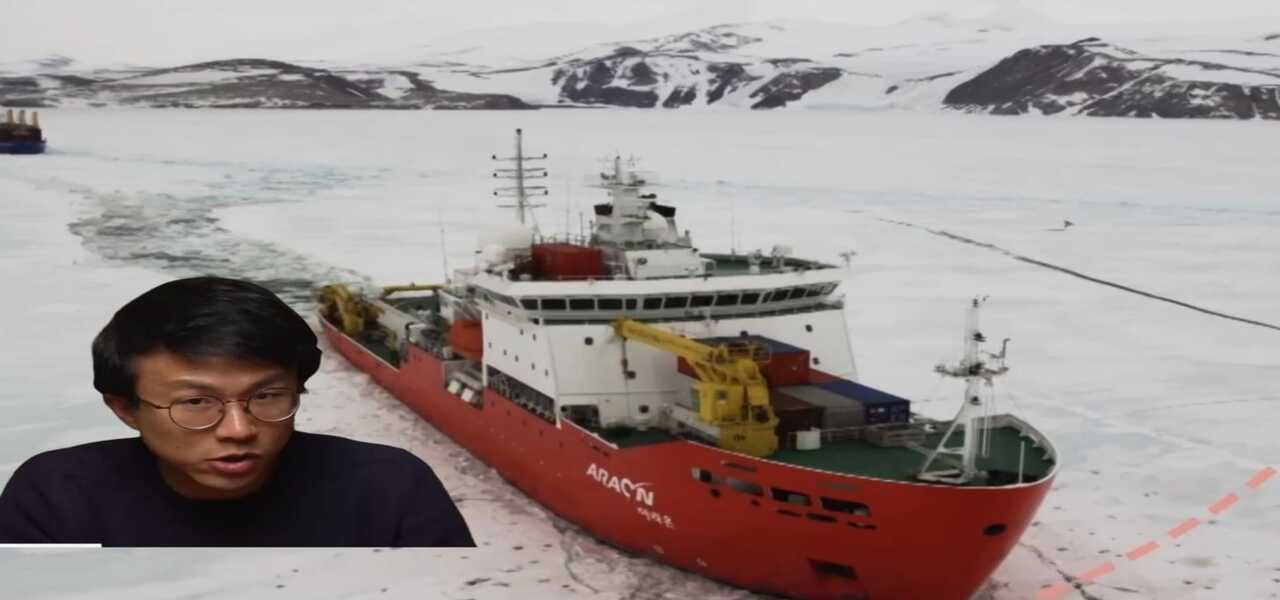
The journey is being carried out on a modern research icebreaker capable of cutting through thick sea ice. The vessel houses advanced laboratories, medical facilities and living quarters. It also has a helipad and carries two helicopters. These aircraft are used to transport scientists to remote glacier zones where ships cannot reach.
Living and Working on Ice
Once in Antarctica, the team operates in sub-zero conditions. Researchers set up temporary camps directly on ice sheets. Snowmobiles are used for surface travel, while helicopters ferry equipment and personnel. Every member has undergone rigorous survival training to cope with frostbite risks, sudden storms and medical emergencies.
Drones in Frozen Skies
In addition, advanced drones play a crucial role in the mission. These drones are designed to operate in extreme cold. They measure glacier depth, ice movement and water temperature beneath ice shelves. High-resolution cameras and sensors collect data that cannot be gathered safely by humans.
Scale of the Operation
The expedition is expected to last nearly two months and will continue until the end of January. The estimated cost of the mission is about Rs. 42 crore. This includes ship operations, aviation support, scientific equipment and safety infrastructure. Such a scale reflects the urgency scientists attach to polar research.
Antarctica’s Scientific Legacy
Antarctica covers nearly 14 million square kilometres and records temperatures as low as minus 80 degrees Celsius. Several countries operate research stations on the continent. India maintains three stations, including Maitri and Bharati, which continue to function year-round. However, the current mission operates far beyond these established bases.
No Ordinary Communication
Daily life in Antarctica is disconnected from the modern world. Conventional mobile networks and internet services do not function. Communication with the outside world relies entirely on satellite phones and systems. Food supplies consist mainly of high-calorie preserved items, essential for sustaining energy in extreme cold.
Lessons from the Past
Polar exploration carries a long history of tragedy. In 1912, British explorer Robert Falcon Scott and his team died from exposure while returning from the South Pole. Since then, safety technology has improved, yet risks remain high. The accelerating pace of ice melt has added urgency to current research efforts.
Reporting at Personal Risk
Therefore, journalists selected for this mission received intensive survival training before departure. Their presence aims to bridge the gap between complex climate science and public understanding. The data and stories emerging from this expedition are expected to shape global climate discourse.
A Mission with Global Stakes
As glaciers retreat faster than ever before, scientists believe the findings from this journey could offer critical insights into future sea-level rise. The expedition stands not only as a scientific effort but also as a testament to journalism carried out at the edge of human endurance, in the service of documenting Earth’s changing climate.