Article Today, America:
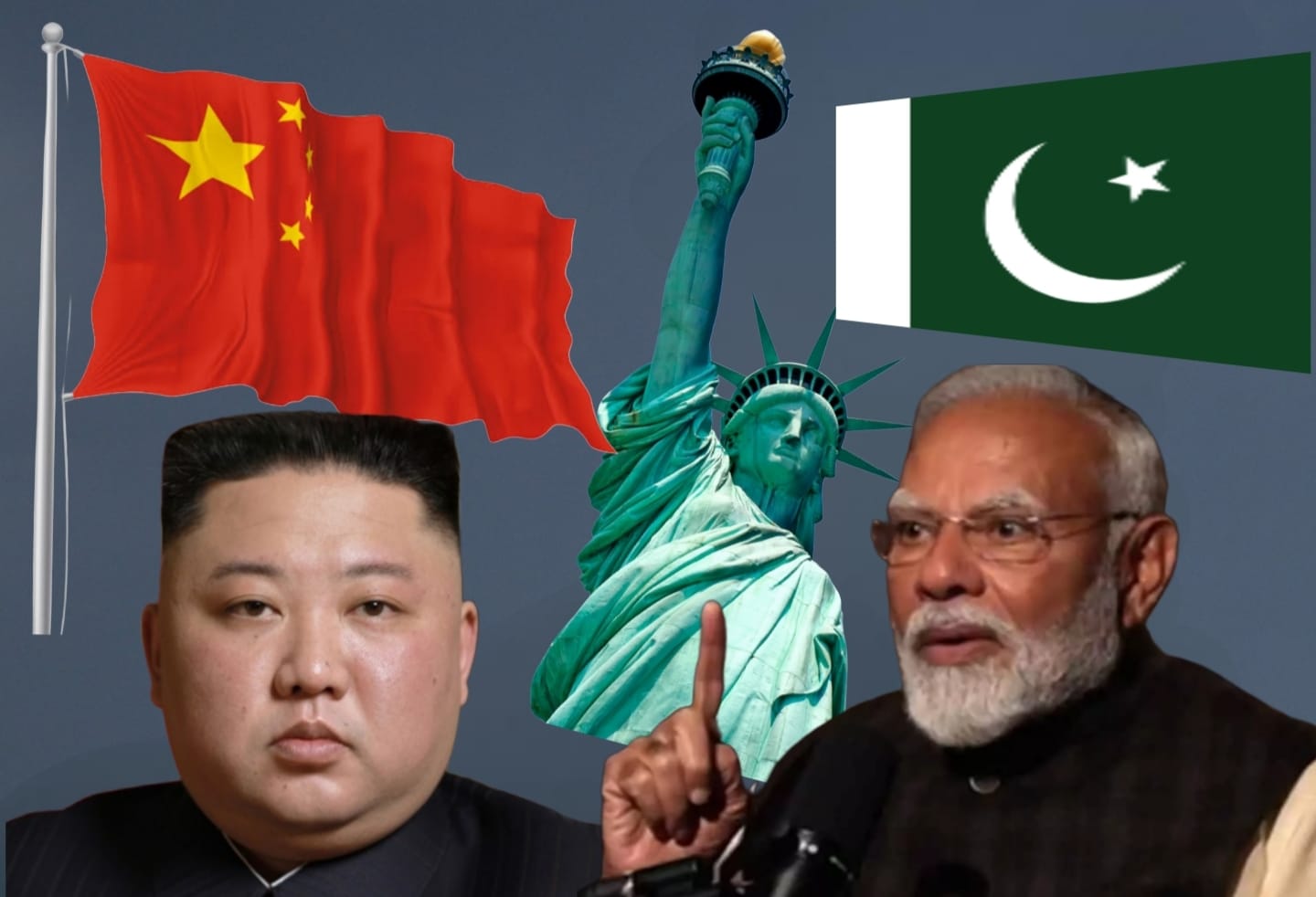
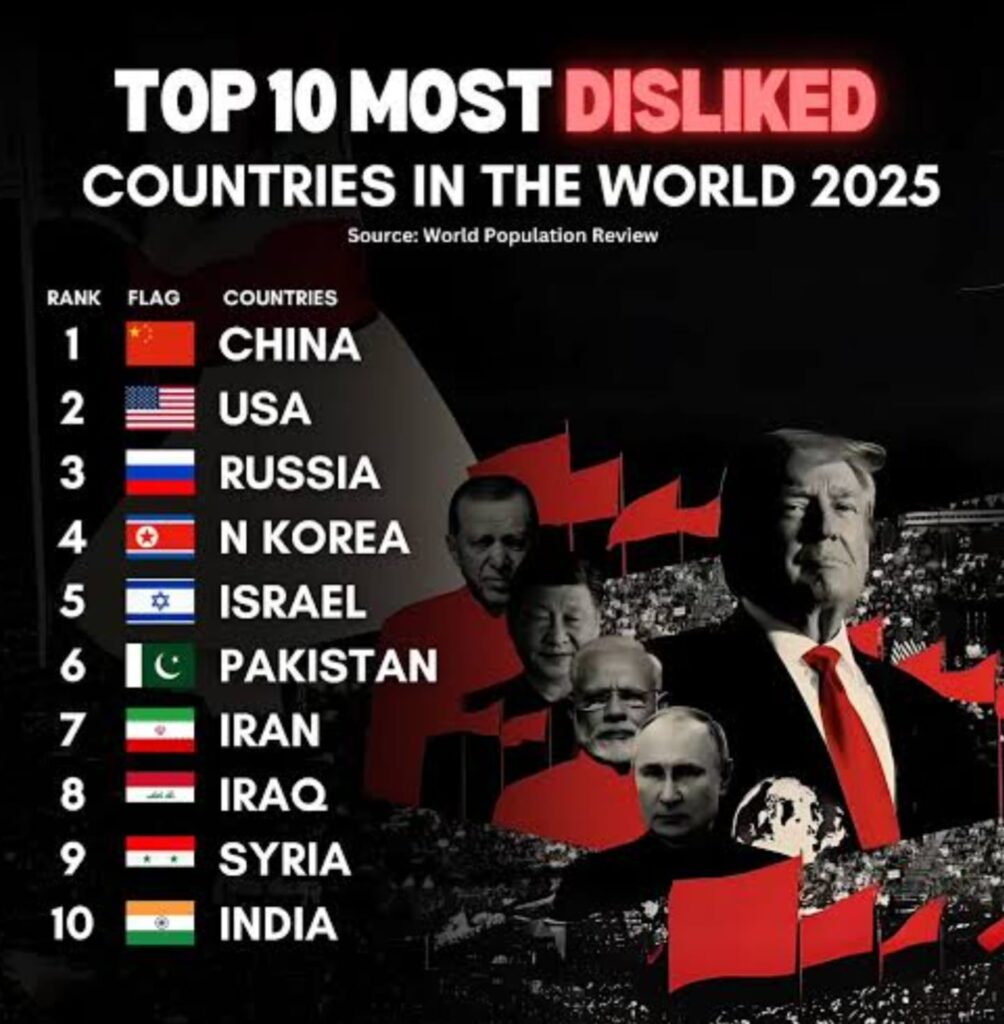
China has emerged as the most disliked country in the world, followed closely by the United States, according to a 2025 global perception survey conducted by World Population Review. The survey assessed public opinion across multiple regions, reflecting attitudes shaped by recent geopolitical, social and humanitarian developments.
China at the Top
China secured the top position in the list largely due to concerns over human rights and political repression. Respondents cited the handling of Hong Kong and Taiwan, allegations of rights violations against Uyghur Muslims and the lack of transparency during the COVID-19 outbreak as key reasons for negative perceptions. The survey indicated that nearly 70 per cent of respondents expressed an unfavourable view of China.
United States in Second Place
Meanwhile, the United States ranked second, driven by criticism of its foreign policy interventions and global military involvement. Public opinion was also influenced by concerns over gun violence, internal social divisions and what respondents described as an assertive global posture. The perception that the U.S. seeks to project itself as a global enforcer has added to international discomfort.
Russia’s Global Image
Russia secured the third position on the list. The ongoing war in Ukraine, restrictions on political freedoms and allegations of authoritarian governance have significantly affected its global standing. In addition, concerns over nuclear rhetoric and regional instability have shaped negative views.
Authoritarian Regimes under Scrutiny
North Korea ranked fourth due to its closed political system and persistent focus on nuclear weapons development. Countries in the Middle East also featured prominently in the survey. Israel, Pakistan, Iran, Iraq and Syria occupied positions between fifth and ninth, largely due to prolonged regional conflicts, internal instability and human rights concerns.
India in the Top Ten
In a development that drew attention, India was placed tenth on the list. The survey cited border tensions with neighbouring countries, debates over federal autonomy and concerns regarding media freedom as factors contributing to a negative perception. However, it also acknowledged that India continues to enjoy strong goodwill for its democratic traditions, cultural influence and economic potential.
Wider Global Message
Therefore, the survey points to a broader trend of public discomfort with militarism, restrictions on freedoms and prolonged conflicts. It suggests that even the world’s most powerful nations are facing growing scepticism among global citizens over governance standards and human rights practices.
Implications Ahead
However, analysts note that such perception surveys are fluid and can shift with policy changes and diplomatic actions. As global power dynamics continue to evolve, public opinion is expected to remain a key factor shaping international relations and soft power in the years ahead.