
Article Today, Brazil:
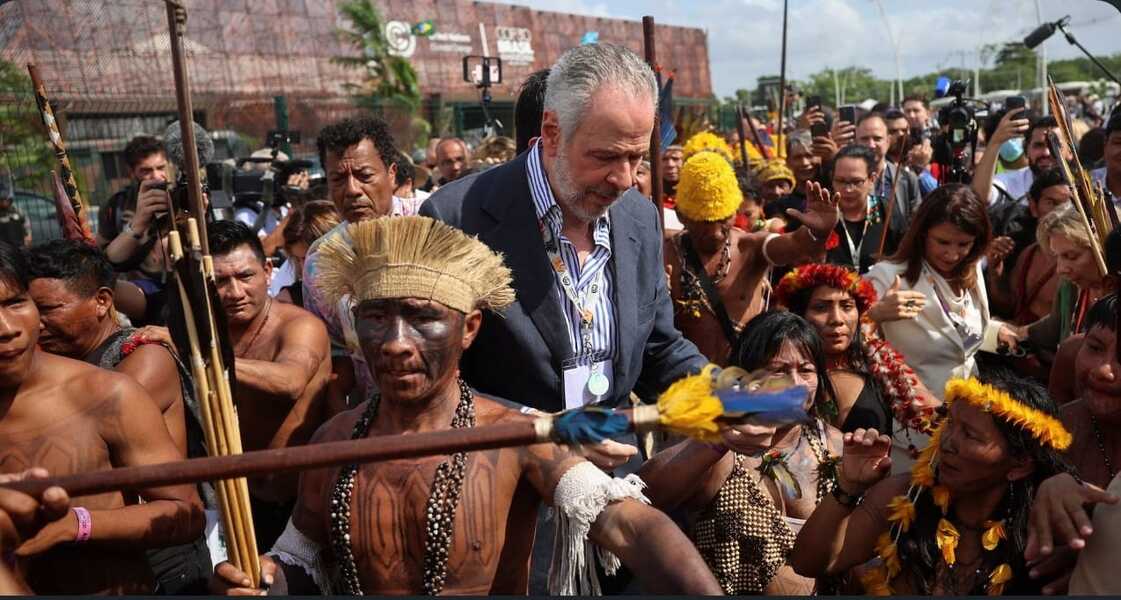
The United Nations Climate Summit (COP30), underway in Belém, Brazil, has witnessed unprecedented mobilisation from Indigenous communities. Thousands of Tribals from the Andes and Amazon regions travelled for nearly a month under the banner Yaku Mama — meaning Mother of Water — to draw attention to rapid forest loss caused by gold mining and oil extraction. They criticised global leaders for expressing concern but failing to act on the environmental damage unfolding in their territories.
Call for Legal Recognition of Land Rights
Indigenous leaders accused governments of sidelining them from decision-making for more than three decades. They argued that panel discussions and cultural showcases are offered as symbolic gestures while substantive policy engagement is denied. They insisted that demarcation of their ancestral lands remains the only proven method to slow deforestation and protect biodiversity. Although scientific studies support this claim, no major country has included land rights in its national climate commitments. A giant inflatable cobra placed at the venue served as a visual reminder of their demand for territorial security.
Discontent with Government Action
Brazil’s President Luiz Inácio Lula da Silva has publicly stated that Indigenous land rights are a priority. However, leaders at the summit said administrative action has been slow. They pointed out that 107 land demarcation files are awaiting final approval but have seen little progress. They also criticised the government for permitting new oil exploration near the Amazon River while urging Indigenous communities to trust the administration’s environmental commitments. According to them, funds required to prevent illegal encroachments and protect forest areas remain insufficient.
A Demand for Accountability
Indigenous groups warned that without secure land rights, any climate pledge risks becoming ineffective. They urged international negotiators to recognise that protecting forests requires empowering those who live in them. They expressed concern that the summit may again end with promises instead of enforceable decisions. Analysts note that the protests have intensified debate on the role of traditional communities in global climate policy and may shape discussions in the days ahead.