- India Nears High Middle-income Status
- Average Income Seen Rising Sharply
- Economy Targets Third Global Rank
Article Today, Hyderabad:
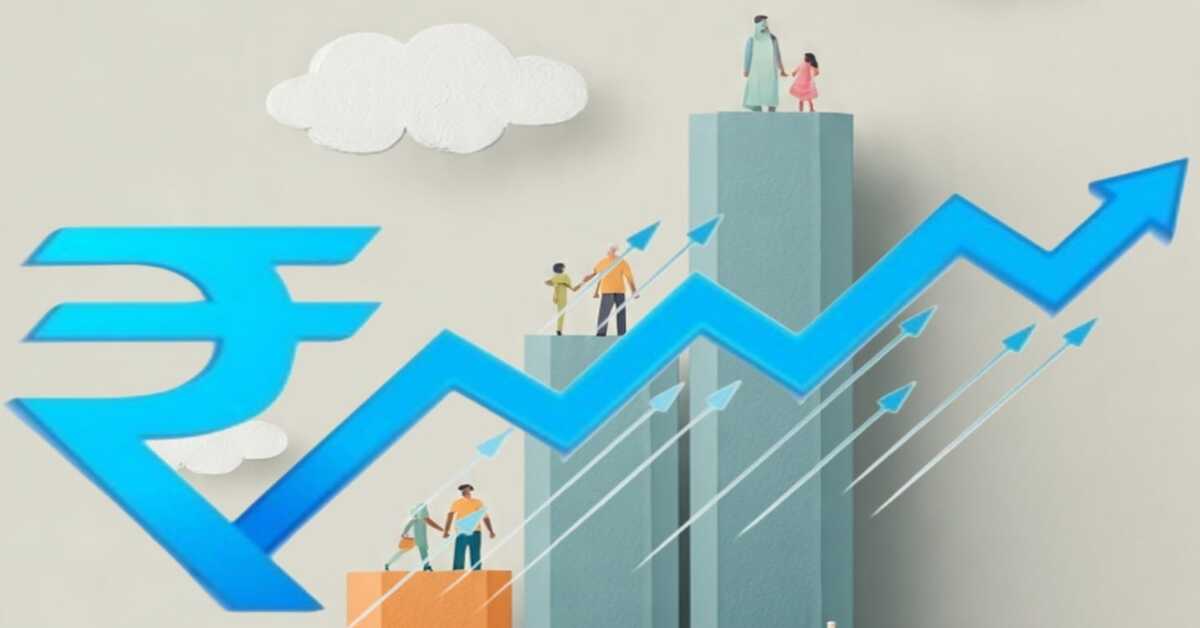
India is poised for a structural shift in its income profile, according to a recent assessment by State Bank of India. The report projects that the country will enter the high middle-income group by 2030, marking a significant transition from decades of lower-income status. This shift reflects sustained economic expansion and demographic momentum.

Income Levels on the Rise
Average annual income per Indian is expected to rise steadily over the next four years. The report estimates that per capita income could reach around Rs. 3.32 lakh within this period. This improvement signals broader gains in productivity and employment, although outcomes will vary across regions and sectors.
Growth Drives Global Ranking
Meanwhile, India’s overall economic size continues to expand at pace. Gross domestic product is projected to reach about Rs. 415 lakh crore by 2027–28. Therefore, by 2028, India is expected to overtake Japan and Germany to become the world’s third-largest economy, reflecting both scale and sustained growth.
From Poverty to Momentum
The journey has been long and uneven. After Independence, India took nearly six decades to shed its low-income classification. In 2007, it entered the lower middle-income category. However, the move towards the upper middle-income threshold is expected to take far less time, underlining the acceleration seen since the early 2000s.
Reform and Technology Factors
In addition, structural reforms, industrial expansion, and technology adoption have played a central role in sustaining growth. Improved infrastructure and deeper financial inclusion have supported investment and job creation. These factors have strengthened consumption while expanding formal economic activity.
The 2047 Ambition
The government has set a longer-term objective of transforming India into a high-income economy by 2047. To achieve this, annual income growth of at least 7.5 per cent will be required. Historically, India has recorded higher average growth, suggesting the target remains within reach if momentum continues.
Concerns Over Distribution
However, the report also raises concerns about income distribution. Critics caution that headline income gains could remain concentrated among higher earners. If growth translates only into higher GDP figures, its impact on everyday living standards may remain limited.
The Test Ahead
Therefore, the coming decades will test whether rising income levels lead to broader improvements in education, healthcare, and living conditions. If gains reach the lowest income groups, the transition to a high middle-income economy will represent not just statistical progress, but a tangible improvement in daily life for millions.