
Article Today, Hyderabad:
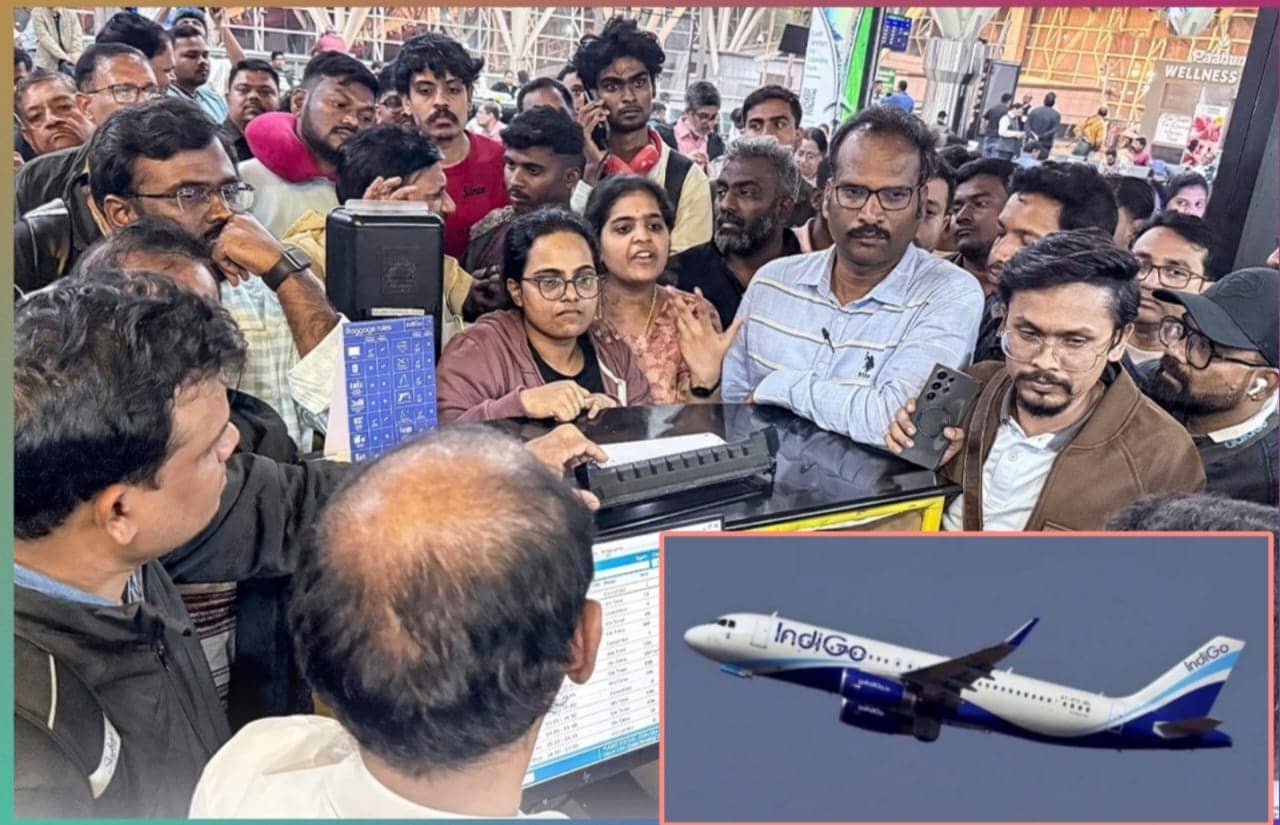
India’s largest airline, IndiGo, triggered large-scale disruption across the country after cancelling more than 2,100 flights over the past week. The cancellations affected an estimated three lakh passengers, many of whom were left stranded at major airports, including Hyderabad, Delhi, Bengaluru, and Mumbai. Several travellers reported missed weddings, urgent business trips, and medical appointments as schedules collapsed without adequate notice.
Passengers Left in Distress
The sudden grounding of Indigo flights caused severe congestion at terminal buildings, with passengers waiting for hours for information on rescheduling and refunds. Many travellers complained that advance bookings were rendered meaningless as back-to-back cancellations continued for several days. However, refund delays and fare recovery issues added to the distress, as several passengers said that the amount paid for cancelled tickets had not been credited promptly.
Allegations of a Planned Crisis
Meanwhile, the crisis has taken a serious turn after IndiGo employees alleged that the disruption was not accidental. In a public communication, staff claimed that the airline’s management deliberately scaled back operations to pressurise authorities to relax newly introduced duty-hour and rest norms for pilots. According to the employees, the airline sought regulatory concessions through service disruptions, placing the burden on passengers and frontline staff.
Regulatory Silence Under Scrutiny
Despite the growing scale of the crisis, the Civil Aviation Ministry remained largely silent for nearly five days. This delay has drawn criticism from travellers and industry observers alike. However, after public pressure mounted, the Centre announced preliminary action, including an internal review of the matter. Union Civil Aviation Minister Ram Mohan Naidu stated that responsibility for the disruption rested with the airline’s management and that appropriate action would follow.
Temporary Relief Measures
In addition, the government imposed temporary fare caps on key routes to prevent a sharp rise in prices due to reduced flight availability. Limited relaxations were also granted in pilot duty regulations to help restore operations. However, critics noted that such relaxations could weaken safety standards and appear to reward the airline despite the scale of inconvenience caused.
Call for Stricter Oversight
Therefore, industry experts have called for the creation of stricter operational safeguards to ensure that no airline can disrupt essential air connectivity on such a large scale. They also urged the regulator to impose penalties and enforce accountability for service failures that affect public mobility. With air travel increasingly becoming a necessity, the crisis has revived debate on market dominance and regulatory preparedness in India’s aviation sector.
