Article Today, Hyderabad:
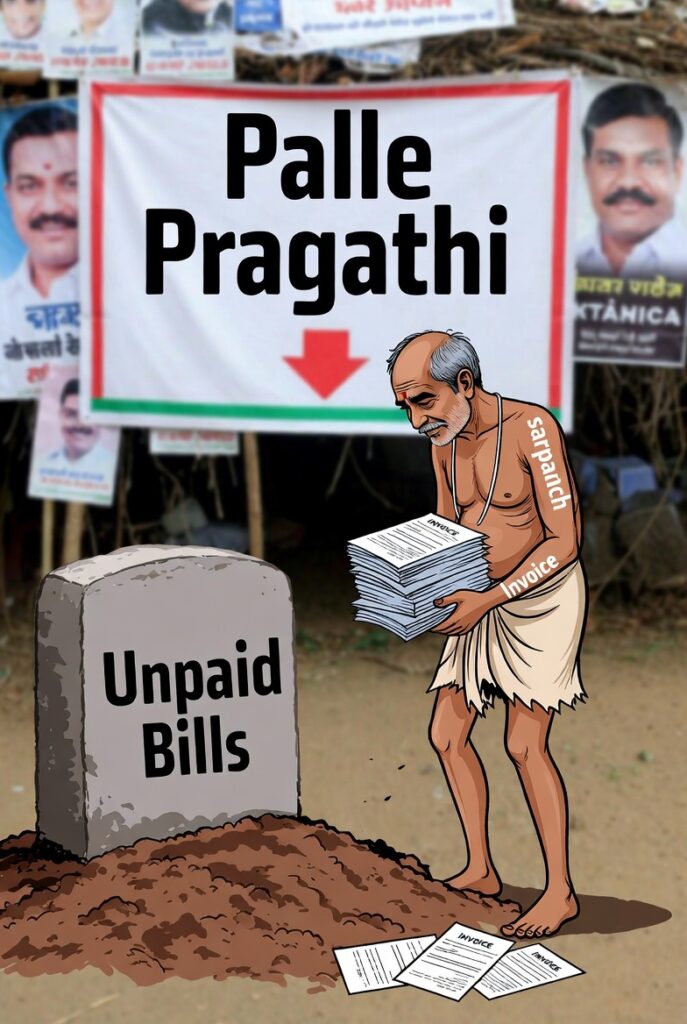
With local body elections approaching in Telangana, the issue of financial distress among sarpanches has returned to public debate. At least 60 sarpanches are reported to have died by suicide over the past five years, allegedly due to mounting debt and prolonged delays in the release of government payments. Media reports during successive election cycles have repeatedly drawn attention to this crisis.
Pending Bills and Official Pressure
During the previous Bharat Rashtra Samithi regime, sarpanches were directed to execute works under programmes such as Palle Pragathi, Haritha Haram nurseries, village parks, dumping yards and cremation grounds. However, several sarpanches allege that funds were not released on time. As a result, many of them borrowed money or spent personal savings to complete projects under pressure from officials.
Personal Debt and Financial Ruin
Former sarpanches state that despite completion of works, bills worth several lakhs of rupees remained unpaid for months and, in some cases, years. Many claim they pledged personal assets, including gold, to raise funds. Some report having spent up to Rs.1 crore on development works without reimbursement, pushing families into severe financial hardship.
Change in Government, Same Grievance
The issue has continued even after the change in government. While Chief Minister A. Revanth Reddy had earlier led protests over unpaid sarpanch bills when in the Opposition, payments are yet to be fully cleared after he assumed office. Sarpanch association leaders now allege that both the previous and present governments failed to address their long-pending demands.
Shift in the Profile of Sarpanches
Traditionally, the post of sarpanch was held by economically stable community leaders. In recent years, however, many middle-class and economically weaker individuals have entered local leadership. Experts note that treating sarpanches like contractors without ensuring timely payments has exposed them to financial risks beyond their capacity.
Political and Administrative Implications
The renewed debate has brought governance at the grassroots under scrutiny once again. As elections near, the demand for immediate settlement of pending bills and institutional safeguards for elected village heads is gaining momentum. Meanwhile, families affected by financial distress and suicides continue to seek accountability and relief.